Healthcare Reform and the Role of the NHSU
Ukraine long lacked a modern healthcare system. In the 21st century, we were still operating under the Semashko system, created back in Soviet times, in the mid-20th century. Everything else in society was changing across various sectors—except healthcare. The outdated Soviet healthcare system and the so-called “free” medicine proved ineffective in modern realities.
This inefficiency placed Ukraine among the world leaders in mortality rates and caused a reduction in life expectancy for Ukrainians. Research shows that under the Semashko system, where medicine was nominally free, up to 50% of healthcare payments were actually made out-of-pocket by patients.
In a modern country moving toward the principles of rule of law, humanity, and inclusiveness, this situation could not continue. That is why healthcare reform was launched in Ukraine, marking the beginning of the transformation of the national healthcare system.

In October 2017, the Verkhovna Rada passed the law “On State Financial Guarantees for Medical Services to the Population.” This officially launched the process of change. The law established the legal and political foundation for introducing new financing mechanisms and digitalization in the healthcare system.
At the end of March 2018, our organization—the National Health Service of Ukraine (NHSU)—was created from scratch. It quickly began the practical implementation of healthcare reform and has grown into a strong, stable institution.
The National Health Service is a state institution that implements healthcare financing reform and serves as the sole national purchaser of medical services in the country. We operate like an insurance company: when something happens to our patients, we give them the opportunity to choose the best hospital, regardless of their place of residence, and cover the cost of their treatment.
Results of the Healthcare Financing Reform:
- We have moved from merely maintaining a network of healthcare facilities to implementing the principle of “money follows the patient.” This means the NHSU pays for the services, medicines, and medical devices actually provided, rather than simply for the existence of a facility, beds, or medical staff.
- We have developed and scaled the Medical Guarantees Program, a defined list of medical services that are free of charge: from consultations with family doctors and specialists in gynecology, endocrinology, and more, to treatment of strokes and heart attacks, rehabilitation, and palliative care.
- People now have the freedom to choose where and from whom to receive medical services. Free treatment is available not only in public healthcare facilities but also in private centers and from private practitioners.
- We have overhauled the “Affordable Medicines” reimbursement program. Life-saving medicines, including insulin, can now be obtained with an electronic prescription at a convenient pharmacy anywhere in Ukraine.
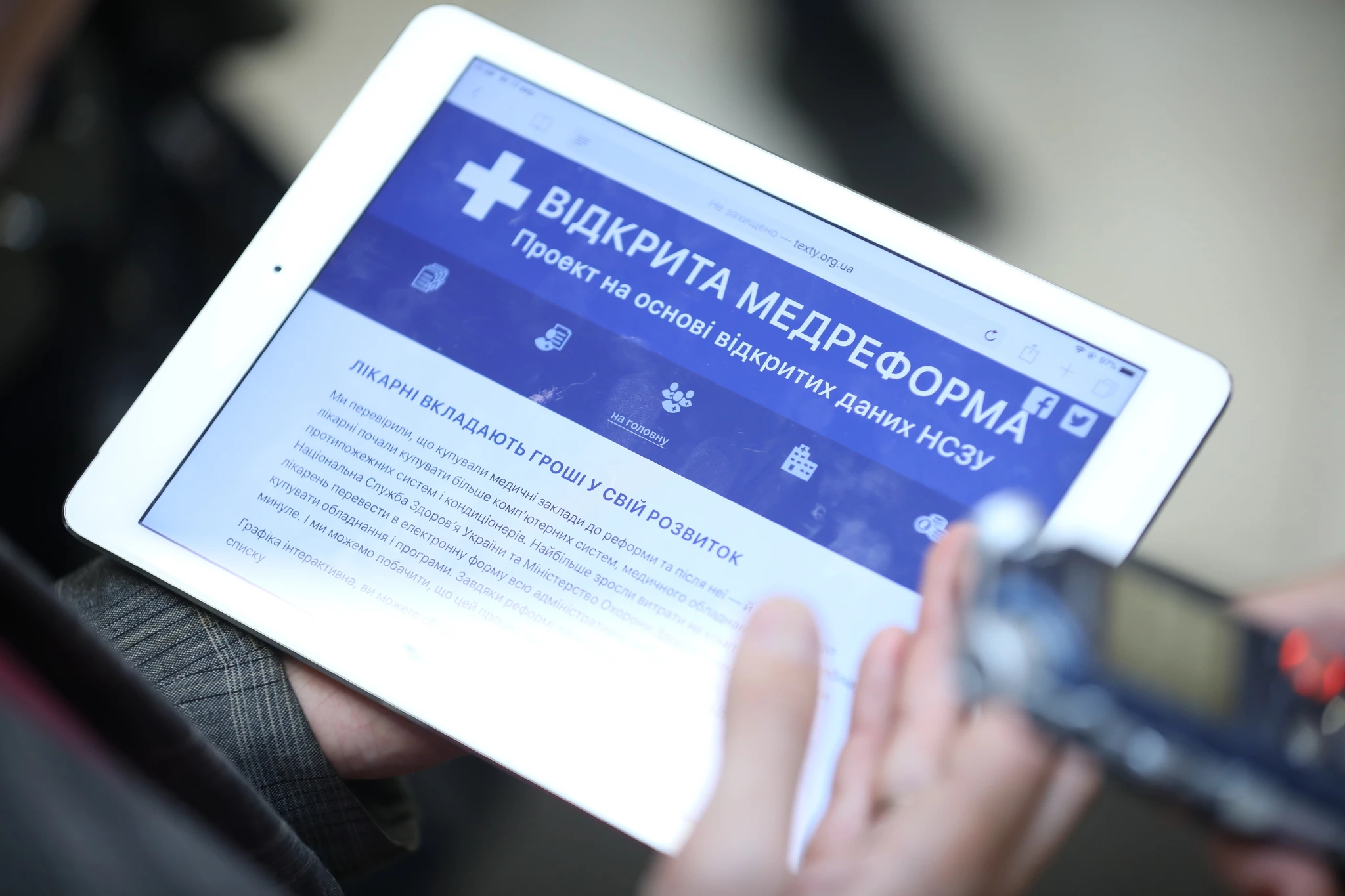
The state has launched and continues to effectively advance the digital transformation of the healthcare system: this includes open data and the development of electronic services for patients, such as:
- Access to finding a necessary hospital that has a contract with the NHSU
- Access to information about which family doctor is available for signing a declaration and which is not, because they have reached their patient limit
- Electronic prescriptions
- Electronic referrals
- Electronic medical records
- COVID certificates
- Electronic sick leave certificates and others
- Public hospitals have gained autonomy and the freedom to manage funds and make administrative decisions in the best interest of people and communities.
- The state has taken the first step toward regulating pricing in the market of state-funded medical services.
- The entire healthcare budget has been shifted to contracts, which means hospitals must generate revenue and become more attractive to patients. A detailed description of each medical service has been introduced as an integral part of the contract, making it easier to monitor quality and protect the rights of patients seeking care.